
Ever wonder why those classic consoles still light up your day? There’s something special about them that goes way beyond just pixels and sounds. Remember the thrill of your first light gun lighting up a TV scoreboard or the excitement of sliding an Atari VCS cartridge in? Each console has its own story of discovery and big wins.
They’re not just old machines, they take us back to simpler times filled with unforgettable moments. In this piece, we’re chatting about how vintage consoles shaped our gaming world and why those epic memories still fire up gamers everywhere.
Understanding Old Gaming Systems and Their Significance
Old gaming systems are more than just relics; they open a window into a simpler era that set the stage for today’s digital battles. It all began in 1979 with the Radio Shack TV Scoreboard, a Pong clone with a light gun (a tool you point at the screen for extra fun). Believe it or not, back then a young gamer got their first taste of pixel magic every time that light gun fired. Soon after, the Atari VCS came in 1980, breaking new ground with a library of cartridge games that pushed the limits of what a console could do.
Every console holds its own story. I remember hearing how a Commodore 64 received on Christmas 1983 became a treasure trove of memories during tough times. It wasn’t just about owning hardware; it was about holding onto moments that meant a lot. Then, the NES in 1985 and the Commodore 128 in 1986 brought even more ways for gamers to have fun, each with its unique titles that defined an era. Collectors still hunt for these machines, not only for their gameplay but also for the rich history they carry.
By 1988, the Amiga 500 burst onto the scene with improved graphics and sound, reminding us of an age when every pixel mattered. These vintage systems are like secret time capsules of early game design. Gamers treasure them as cultural icons that have inspired the evolution of consoles we play on today.
Timeline of Old Gaming Systems: Pong to Amiga and Beyond
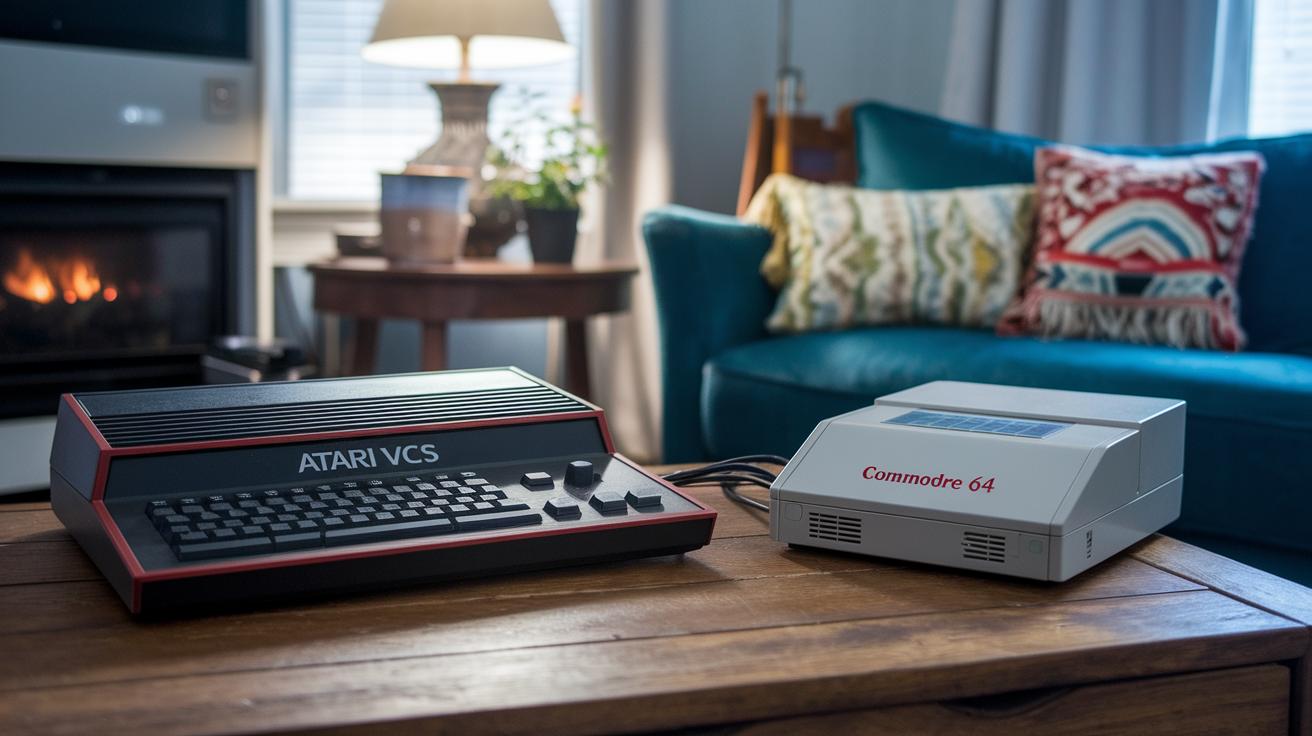
Back in 1979, the TV Scoreboard got players buzzing with its built-in light gun. This neat trick kickstarted interactive fun and paved the way for consoles to do way more than just hit a ball back and forth.
Then came the Atari VCS. It packed a variety of game cartridges that opened up a world of choices and helped spark the video game explosion. Gamers loved how it changed the way they experienced home entertainment.
Next up, the Commodore 64 became a household name. With 64 KB of RAM and a SID sound chip (a special chip that makes game sounds richer), it delivered memorable game sessions that defined an era of at-home play.
In the mid-1980s, the Nintendo Entertainment System earned players' trust by using a lockout chip (a tool to keep unapproved games out) and a robust library of games. This reliable setup even helped shape how software was managed later on.
The Commodore 128 stepped up with dual-mode CPU support. This meant home computers could handle more complex tasks and multitask, something gamers found really exciting and forward-thinking.
Finally, the Amiga 500 blew everyone away with custom graphics and sound chips. Its awesome blend of visuals and audio captivated a growing community of players and marked a turning point in home computing.
| Year | System | Notable Feature |
|---|---|---|
| 1979 | TV Scoreboard (Pong clone) | Built-in light gun sparking interactive play |
| 1980 | Atari VCS | Diverse game cartridges fueling the video game boom |
| 1983 | Commodore 64 | 64 KB RAM and SID sound chip for richer audio |
| 1985 | Nintendo Entertainment System | Lockout chip and trusted game catalog that shaped software standards |
| 1986 | Commodore 128 | Dual-mode CPU support hinting at multitasking capabilities |
| 1988 | Amiga 500 | Custom graphics and sound chips that revolutionized home visuals |
Technical Highlights of Retro Gaming Hardware
These old-school consoles weren’t just machines for gaming; they sparked ideas that still drive our hardware today. Each system pushed creative coding and design to beat limits, laying the groundwork for modern tech breakthroughs.
-
Atari VCS (1980): Its 8-bit CPU forced developers to write super-efficient code. This clever setup still shows up in mobile games, where every bit of memory counts. Ever think how one simple chip could ignite a revolution in coding practices?
-
Commodore 64 (1983): The SID sound chip whipped up rich, complex sounds long before digital audio was a thing. Today’s sound tech builds on that creativity, turning basic audio into deep, immersive experiences. It’s like the early beats that set the stage for layered game soundtracks.
-
Nintendo NES (1985): With a PPU that made backgrounds scroll smoothly, game worlds felt alive. Modern pixel art and dynamic rendering tip their hats to these early tricks. You ever catch that retro vibe and feel a surge of nostalgia?
-
Commodore 128 (1986): Its dual-mode CPU could juggle gaming and basic computing at the same time. This early take on multitasking paved the way for today’s multicore processors in consoles. It’s like having a built-in cheat code for running more than one task at once.
-
Amiga 500 (1988): Custom chips let it handle graphics and audio at the same time, a hint at early parallel processing. This smart design paved the way for the smooth, multi-threaded operations we see in modern gaming gear. It showed us that handling multiple tasks simultaneously is really what makes a game feel alive.
Finding Old Gaming Systems for Sale
Hunting for vintage consoles feels like a cool adventure. Many collectors spend hours digging through online shops, chasing that perfect memory and that piece missing from their lineup. Whether you're after a rare console or one that still runs like a champ, each place has its own ups and downs.
- eBay: You'll find a huge global market with loads of options. But sometimes, what seems like a bargain can turn pricey depending on how rare it is or where the seller is based.
- DKOldies: This family-run retro shop offers a handpicked selection that usually means quality. The downside? There’s not as many choices as on bigger sites, though free shipping on orders over $20 is a neat bonus.
- Facebook Marketplace/local classifieds: Meeting someone nearby lets you check out the console in person before you buy. Just be ready to negotiate prices and watch out for local scams.
- Specialty online forums and Discord groups: These spots give you access to secret finds and tips from a tight collector community. On the flip side, items don’t pop up as often, and you might have to wait a bit.
For more options, check out the marketplace for used gaming consoles to expand your collection. Ever felt that rush when you finally snag that rare gem?
Maintenance and Restoration Tips for Vintage Gaming Systems
Messing with old gaming consoles can be as exciting as nailing that perfect play in your favorite game. Sometimes, you end up combining pieces from different systems (donor units) to rebuild one complete machine. It’s all about smart, preventive care instead of heavy fixes. I remember working on a console in a delicate state and learning that avoiding unnecessary swaps is like keeping that original cartridge untouched, preserving every pixel’s magic.
In my experience, careful troubleshooting and sharp repairs beat a full system overhaul any day. Instead of tinkering with every part, I focus on the must-fix items, like only swapping out capacitors when they really fail (they store and release power, kind of like your system’s heartbeat). This way, the retro vibe stays intact without messing with its classic design. Imagine playing a legendary game without altering a single detail.
Here are some top tips to keep your retro systems in prime shape:
- Use donor units to rebuild a complete system.
- Avoid swapping parts unless absolutely needed.
- Replace capacitors only when they critically fail.
- Regularly clean and dust off consoles to stop deterioration.
- Focus on preventive care for lasting performance.
Comparing Classic Video Game Consoles

Collectors see old-school consoles as more than just relics from the past, they’re markers of game-changing design. Sometimes we forget that these systems first introduced cool features that paved the way for today’s gaming add-ons. For example, the TV Scoreboard had a rare light gun (a device for aiming and shooting on screen) that gave a hint of what was to come. Picture a collector noticing that one quirky feature and thinking, "Wow, this could spark a wave of new accessories!"
| System | Launch Year | Collector’s Note |
|---|---|---|
| TV Scoreboard (Pong clone) | 1979 | Rare light gun feature |
| Atari VCS | 1980 | Foundational cartridge titles |
| Nintendo Entertainment System | 1985 | High nostalgia, wide library |
| Amiga 500 | 1988 | Advanced audio/graphics favored |
Today, collectors measure these consoles by the way they pushed design and technology forward, not just by reminding us of the good old days.
Nostalgia and Cultural Impact of Old Gaming Systems
Old gaming systems are more than just circuits and wires; they hold memories that bring generations together. Remember the rush when you first played Donkey Kong on a ColecoVision? That excitement turned a simple game into a must-have treasure. Back then, every game felt fresh, and each pixel shined like gold.
Family ties grew stronger thanks to the magic of console gifts during the holidays. Think of a Christmas surprise in 1979 or a thoughtful gaming gift during tough times. These consoles were not just for play, they were symbols of love and connection that created moments still cherished today.
Today, online forums and restoration groups keep these memories alive. Gamers swap stories about fixing up a rare console or sharing tips to keep these vintage machines as original as ever. This shared passion keeps the spirit of those classic systems strong.
- Old school games that spark wild childhood memories
- Holiday gifts that built lasting family bonds
- A united community preserving the heart of classic gaming
- Restoration adventures that keep vintage gaming magic alive
Final Words
In the action, we recapped how classic consoles paved the way for modern gaming. We hit on key moments, like that light gun on TV Scoreboard and evolving features from Atari VCS to Amiga 500, that made every play memorable.
We also explored where to pick up these gems and tips on keeping them in top shape. Old gaming systems remind us that every retro console holds a slice of our history and fun. Keep leveling up, and may your gameplay always feel fresh.
FAQ
What are some old gaming consoles?
The answer means that consoles like the TV Scoreboard, Atari VCS, Commodore 64, Nintendo Entertainment System, and Amiga 500 are classic systems that shaped gaming history.
What is the oldest game system?
The answer shows that the earliest system, such as the 1979 TV Scoreboard Pong clone with a built-in light gun, is considered the pioneer in home gaming.
Are old gaming systems worth anything?
The answer indicates that vintage consoles can have significant value because of nostalgia and rarity, though their worth depends largely on condition and collector interest.
Where can I find old gaming systems near me or for sale?
The answer suggests checking popular online spots like eBay, DKOldies, Facebook Marketplace, and specialty gaming forums to find retro systems for sale locally or online.
How can I see all gaming consoles in order or a video game console timeline?
The answer explains that detailed timelines exist that chronologically list consoles from the early models like the TV Scoreboard to later icons, spotlighting major innovations along the way.
What does a retro game console with built-in games mean?
The answer clarifies that this refers to a console with pre-installed games, allowing you to play right out of the box without needing extra cartridges or downloads.
What is GameStop Retro?
The answer tells that GameStop Retro is part of GameStop’s effort to feature classic gaming systems and games, catering to collectors who appreciate vintage consoles.
What was a popular old game console in the 1990s?
The answer outlines that 1990s favorites like the Super Nintendo and Sega Genesis became widely popular due to their vast game libraries and lasting appeal among retro game fans.