

Ever wonder how one smart play can completely flip the game? The minimax strategy is like your trusty game buddy that helps plan out moves while dodging potential pitfalls (pitfalls mean risky outcomes). It works by checking every possible move and picking the one that offers the best reward. Think of it as a secret game guide that lights your way through the trickiest levels. Keep reading, and you might just find that this tactic is your new key to epic wins.
minimax strategy Fuels Winning Game Tactics

Ever wondered how to choose the best move even when things look rough? The minimax strategy helps you plan for the worst while still aiming for the best result. Think of it like mapping out your game move when every option has its highs and lows – this approach lets you pick the one that cuts your losses.
In a head-to-head game, where one player's win is the other’s loss, minimax really comes into play. It checks out every possible move and then selects the one with the highest guaranteed payoff. Basically, it puts smart, step-by-step thinking into every decision, even in those intense, nail-biting matchups.
You see this trick used in AI for games like chess or tic-tac-toe. Programmers lean on minimax to balance risks and rewards, turning complicated game moves into something more predictable. And here’s a cool tidbit: long before minimax powered winning AI, it was used to solve simple puzzles where the outcomes were crystal clear.
Minimax Strategy: Algorithmic Steps and Pseudocode
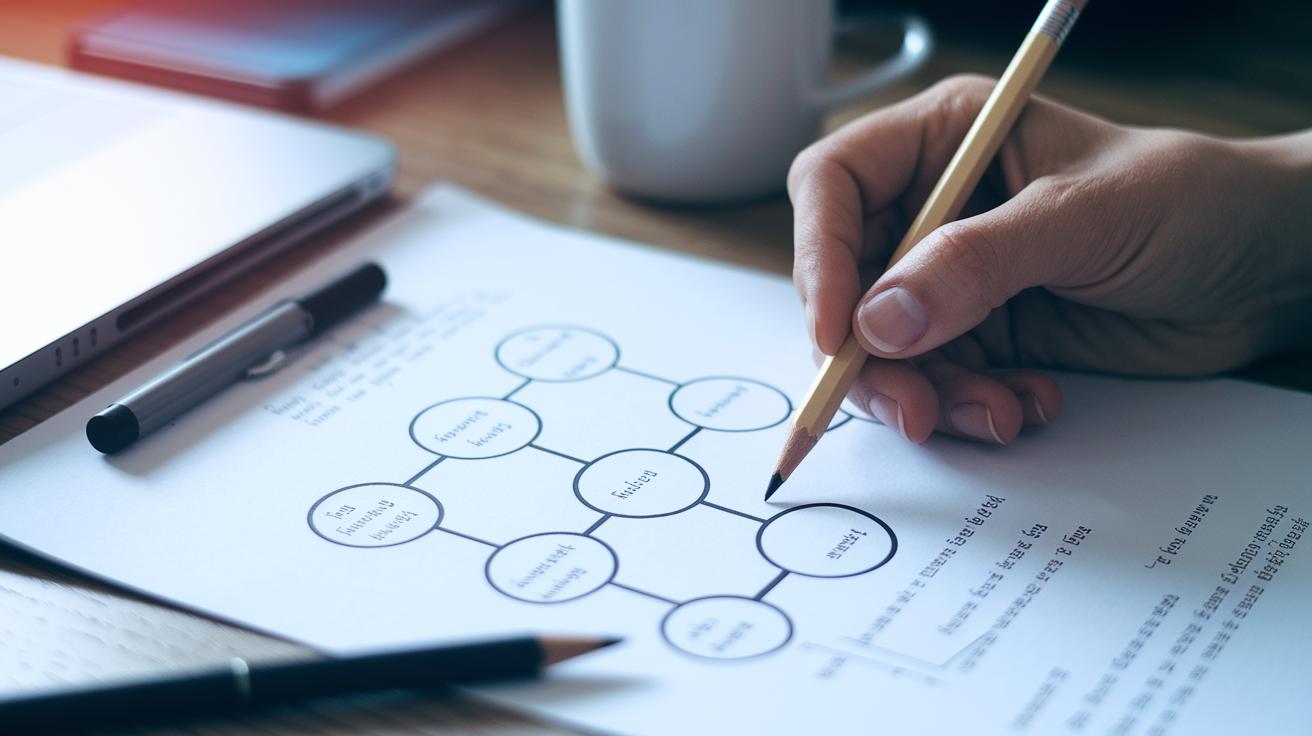
Imagine you're planning your next move in a game and want to make the smartest play. The minimax method does just that. It checks all possible game moves, giving the final game states a score (for example, a win gets +1, a loss gets -1, and a tie gets 0). Then it works its way back through these moves, picking actions that promise the best outcome. It’s like a chain reaction where each decision leads smoothly to the next until the best move is clear.
Here’s how it works:
- First, create a decision tree by simulating every move you could make from the current game state.
- Assign scores to the end nodes based on the outcome (win, loss, or draw).
- Starting at the end, go back step-by-step through the tree.
- At each step, if it’s your turn (maximizer), pick the move with the highest score. If it's your opponent’s turn (minimizer), choose the move with the lowest score.
- At the very start, choose the move that leads to the best score overall.
- Stop once every branch in the tree has been filled in with these scores.
This one-time build saves you time and computer power later on. Instead of rebuilding the tree every turn, you mark up all the nodes ahead of time and reuse that setup for each decision. It streamlines your approach and makes quick, on-the-fly strategy changes a lot easier.
Minimax Strategy in Practice: Tic-Tac-Toe and Chess Examples
Minimax is a cool approach to picking the best move in games like Tic-Tac-Toe and Chess. In Tic-Tac-Toe, every choice leads to one of about 255 states. Each outcome is scored simply as win (+1), loss (-1), or draw (0). Fun fact: A complete Tic-Tac-Toe game could hit around 255 distinct states thanks to using a payoff matrix (a simple scoring method).
| Game | Tree Depth | Branching Factor | Terminal Utilities |
|---|---|---|---|
| Tic-Tac-Toe | Up to 9 plies | About 255 states | Win = +1, Loss = -1, Draw = 0 |
| Chess | Over 40 plies | About 35 moves per turn | Based on game outcomes |
Chess takes things to a whole new level. Every move opens up roughly 35 possible responses, and the game often goes on for more than 40 moves. With so many options, it can get a bit overwhelming. That is why trimming off extra, unnecessary moves (known as pruning) is so important.
Whether you are playing a simple board game or locked in a deep tactical duel, minimax urges you to pick the move with the best worst-case outcome. It scores each ending using a payoff matrix, keeping the decision process steady, even when the game gets more complex.
Ever felt that rush when the perfect move turns the tide? That is the power of minimax, blending easy math with genuine gamer intuition.
Minimax Strategy Benefits and Limitations
Imagine planning every possible move before you even take your turn. That’s what minimax does, it looks at all your options and picks the one that limits your loss, even when things get tough. It almost feels like having a backup plan for every tricky spot in the game. This strategy makes it easier to face strong opponents because you always have a plan that meets the worst-case scenario head-on.
But there’s a twist. In games with a huge number of possible moves, the minimax method can slow things down big time. The game tree grows super fast, and checking every branch can tax your computer or brain. Oftentimes, you need shortcuts, like cutting off parts of the tree (called pruning or using quick guesses known as heuristics) to keep things running smoothly. Plus, when you mix in ideas like regret minimization (where you tweak your moves based on what your opponent might do), the pure worst-case nature of minimax can clash, making it hard to plug into fast-paced, ever-shifting matchups.
Minimax Strategy Variations and Optimization Techniques

Alpha-beta pruning is like a smart filter that tosses out moves which won't change the final result. It cuts down the work from checking a huge number of possibilities to only about the square root of that load. With dynamic programming using memoization, it saves results from parts of the game (think of it as keeping a cheat sheet) so it doesn’t repeat needless work. This caching trick means fewer extra calculations and faster decisions. And then iterative deepening comes in, gradually increasing the search depth to help rank moves better. It’s like building your game plan layer by layer, ensuring you pick the best move without overloading your system.
There are also some cool twists on the minimax method. For instance, in non-zero-sum games (where the result isn’t just a win or loss), players can mix up their strategies to stay unpredictable and add extra depth in competitive play. On top of that, adversarial machine learning uses minimax ideas to plan for the worst-case scenario, building robust models that keep their edge even as conditions get tough. Ever seen an AI that adapts in the middle of a fast-paced battle? That’s these techniques in action, helping game intelligence stay sharp and flexible.
Advanced Minimax Strategy Theory: Equilibria and Theorems
Saddle point analysis is all about finding that sweet spot in a game where both players pick moves they can’t better on their own. It matches the best worst-case move with the worst best-case move. Imagine a board game where every move lands perfectly so no one can grab an advantage. That’s the heart of saddle point analysis.
Von Neumann’s minimax theorem shows that even in games where you mix up your moves, there’s always a reliable strategy to lean on. This means you can create a steady plan with a mix of moves, keeping your game solid no matter what trick your opponent pulls. It’s like having a playbook where every move combo helps you stay safe from sudden surprises.
Sion’s theorem goes even further. It tells us that even in games with a huge number of possible moves, kinda like having endless options, you can still find the perfect mix if the game rules are neat enough. Even when things get super complex, strategy and math team up to help you pick winning moves, like following a secret recipe that works even in the wildest of game scenarios.
Final Words
In the action, we explored the core concepts behind the minimax strategy, breaking down worst-case decision making and its role in game theory fundamentals. We stepped through a recursive algorithm, examined pseudocode details, and tested its power in games like tic-tac-toe and chess. Our deep dive covered both the benefits and wrinkles of this approach and even touched on clever optimizations. The article leaves you with clear, practical ideas to up your competitive decision analysis. Keep that positive spirit alive as you level up your gameplay!
FAQ
What is an example of minimax strategy in game theory?
The minimax strategy example shows how players choose moves that give the best worst-case outcome, like using it in tic-tac-toe or chess to evaluate potential moves and secure the most favorable guaranteed result.
What does minimax strategy theory mean?
The minimax strategy theory means choosing the action with the best worst-case scenario. It’s a core idea in game theory, where decision makers plan for the toughest possible opponent moves.
How is minimax used in AI and Python implementations?
The minimax AI approach applies the algorithm in game-playing programs. Many use Python to implement it, as the language’s clear syntax helps build recursive functions that evaluate game moves effectively.
What is the minimax algorithm?
The minimax algorithm is a recursive method that assigns utility values to game outcomes and then propagates these values up the game tree to determine the best move in competitive settings.
What does minimax regret involve?
The minimax regret concept involves balancing potential losses by considering what you might miss out on if a different move were chosen. It compares decisions to minimize future regret when outcomes differ.
What is minimax as a business strategy?
The minimax business strategy applies the game theory concept to business decisions by focusing on reducing maximum potential losses during uncertain market conditions, much like selecting the safest move in a game.
How does minimax differ from maximin strategy?
The minimax strategy focuses on minimizing the worst-case losses, while the maximin strategy emphasizes maximizing the minimum gain. They offer different approaches depending on whether you want to reduce risk or enhance guaranteed rewards.