
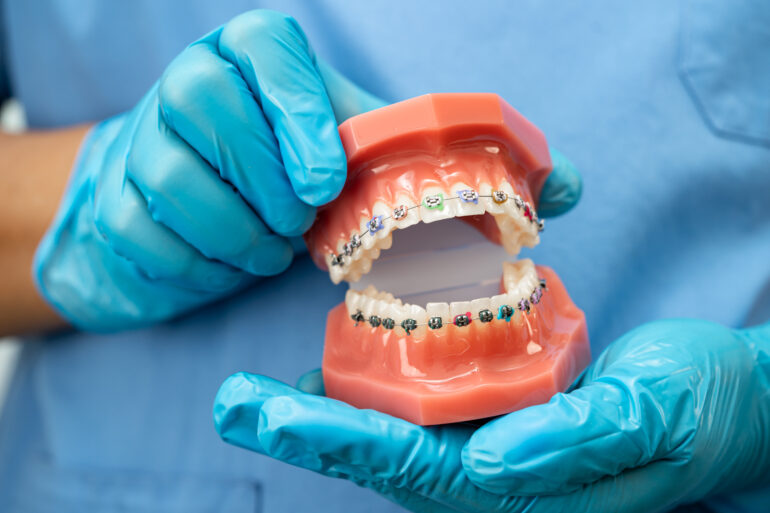
Cleaning your teeth with braces is a whole different challenge. Brackets, wires, and tight spaces create the perfect environment for food and plaque to hide — and regular brushing simply doesn’t reach everything. That’s where flossing becomes critical. But when it comes to orthodontics, the debate between water flossers and traditional flossing is real, and the answer isn’t as straightforward as you might think.
The Case for Traditional Flossing
Traditional flossing has been the gold standard in oral hygiene for decades. With braces, it still holds value — but it requires significantly more effort. You’ll need to thread the floss under each wire, which means using a floss threader or orthodontic floss to navigate around your brackets.
Done correctly, traditional flossing physically removes plaque and debris from between teeth and along the gumline. That mechanical scraping action is effective. The downside? It’s time-consuming and frustrating, especially for younger patients or anyone new to orthodontics. Skipping it becomes tempting, which defeats the purpose entirely.
The Case for Water Flossers
Water flossers use a pressurized stream of water to flush out food particles and bacteria from between teeth and around brackets. They’re fast, easy to use, and make cleaning around orthodontic hardware far more manageable.
One of the biggest advantages for braces wearers is access. Water flossers reach areas that traditional floss struggles to get to — underneath wires, around brackets, and along the gumline. For patients in orthodontic treatment, this kind of comprehensive cleaning can make a real difference in gum health and overall hygiene.
Water flossers are also gentler on sensitive gum tissue, which is a common concern when braces cause irritation. Many orthodontists now recommend them as part of a complete oral care routine.
So, Which One Actually Wins?
Here’s the honest answer: neither method is perfect on its own.
Traditional flossing removes plaque through direct contact and scraping. Water flossers excel at flushing and rinsing, but they don’t provide the same mechanical removal of sticky plaque biofilm. Each method has a strength the other lacks.
For braces wearers specifically, using both together is the most effective approach. Start with a water flosser to clear out loose debris and flush around brackets, then follow up with traditional flossing to address plaque build-up between teeth. It takes a few extra minutes, but your teeth — and your orthodontist — will thank you.
Practical Tips for Flossing with Braces
- Use a floss threader or superfloss to make traditional flossing faster and less frustrating
- Run the water flosser along the gumline and around each bracket for maximum coverage
- Floss at least once a day, ideally at night before brushing
- Rinse with an antimicrobial mouthwash after flossing to eliminate remaining bacteria
- Be consistent — gaps in your routine allow plaque to build up quickly around brackets
The Bottom Line
Orthodontic treatment is a significant investment in your smile. Protecting that investment means taking oral hygiene seriously throughout the entire process. Whether you prefer traditional flossing, a water flosser, or a combination of both, what matters most is that you’re cleaning thoroughly and consistently.
If you’re unsure which method is right for your specific situation, ask your orthodontist. They can recommend tools and techniques tailored to your braces, your gum health, and your lifestyle. Clean teeth don’t just look better — they set the foundation for a healthier, longer-lasting result once your braces come off.