

Have you ever noticed how a new PlayStation feels like unlocking a secret level? When Sony first dropped a CD-based console in 1994, it totally shook up the gaming world.
Each new model, from the very first to the PS5, gives us a fresh burst of fun whether you're at home or out on the go. It's like grabbing a power-up that boosts your play every single time.
Stick around as we chat about how these consoles have evolved over the years, lighting up our gaming sessions and fueling that rush of excitement.
Evolution of PlayStation Consoles: A Complete Timeline
Since the first PlayStation burst onto the scene in December 1994, Sony's consoles have been lighting up gaming life around the world. That original CD drive design opened up epic game experiences and totally changed how we play.
Then came the PS One launch on September 19, 2000, with a sleek new look and no reset button. In 2002, they even added an optional Combo screen accessory, a tiny tweak that felt as satisfying as finding a secret upgrade mid-game.
The PlayStation 2 hit in March 2000 and quickly became a fan favorite by selling 155 million units worldwide. Its Slim version, which dropped in November 2004, trimmed down the bulk and power needs with a top-load disc drive, much like swapping in more efficient parts to boost your rig.
Portable gaming also got its glow-up. The PSP debuted in December 2004 and was soon followed by the PS Vita in February 2012, letting you enjoy a full console vibe even when you’re on the move.
Then came the high-definition era with the PS 3 on November 17, 2006. It rocked Blu-ray technology and online play, pulling gamers deeper into the action. Later, the Slim in September 2009 and the Super Slim in September 2012 made things even cooler by cutting down on size and power draw.
Fast forward to November 15, 2013, when the PS 4 launched with lightning-fast internals and the iconic DualShock 4 controller. The improvements continued with the Slim and Pro models, ironing out any kinks for a smoother play. And then the PS 5 dropped on November 12, 2020, packing in ray tracing (a feature that makes game lighting super realistic) and 120FPS, with its evolving versions still pushing the limits of performance.
| Console Model | Release Date | Key Feature |
|---|---|---|
| Original PlayStation | Dec 1994 / Sep 1995 | CD-ROM breakthrough with iconic games |
| PS One | Sep 19, 2000 | Streamlined design; removed reset button |
| PlayStation 2 | Mar 2000 | Global hit; sold 155 million units |
| PlayStation 2 Slim | Nov 2004 | Top-load disc drive; improved efficiency |
| PSP | Dec 2004 | First UMD portable for games, movies, music |
| PS Vita | Feb 22, 2012 | Advanced portable with Remote Play |
| PlayStation 3 | Nov 17, 2006 | Blu-ray drive and online connectivity |
| PS 3 Slim | Sep 1, 2009 | Lighter design with reduced power consumption |
| PS 3 Super Slim | Sep 25, 2012 | Quieter cooling and refined top-load drive |
| PlayStation 4 | Nov 15, 2013 | 5× faster internals and DualShock 4 |
| PS 4 Slim | Sep 15, 2016 | Compact, quieter design |
| PS 4 Pro | Nov 10, 2016 | Enhanced 4K HDR gaming performance |
| PlayStation 5 | Nov 12, 2020 | Ray tracing and 120FPS 4K native output |
| PS 5 Variants | 2020–2024 | Slim’s modular disc drive and Pro’s upscaled performance |
Original PlayStation: Design, Games, and Legacy

The first PlayStation dropped on September 9, 1995, after a deal with Nintendo went south and plans for a SNES CD-ROM accessory fell apart. This launch changed the game, literally, CD-ROM technology powered epic titles like Final Fantasy VII (a breakthrough RPG), Metal Gear Solid (a stealth action gem), and Resident Evil 2 (horror at its best). Imagine the rush when gamers discovered their favorite adventures were stored on a disc, it felt like uncovering hidden treasure.
The console’s design was a game-changer, too. That heavy, fan-cooled box was a far cry from the sleek systems we enjoy today. Holding a disc back then was like gripping a magic ticket to another realm, sparking lively debates about discs versus digital downloads. It’s nostalgia at its purest.
In 2000, the PS One came out with a cleaner look, bye-bye, reset button, shaving off extra frills for a streamlined design. Then, in 2002, an optional Combo screen add-on injected even more personality into the mix. This shift from the bulky original to the sleeker version didn’t just show off new tech; it cemented PlayStation’s status as a true icon, a symbol for gamers stepping into a whole new era of interactive fun.
PlayStation 2 Era: Best-Selling Features and Slim Revision
The PlayStation 2 first hit the scene on October 26, 2000, and quickly became the top-selling console, moving 155 million units worldwide. One of its coolest features was the ability to play original PS1 games, so you could dive back into your old favorites while checking out the latest games.
In November 2004, the console got a stylish upgrade with the Slim version. It came with a top-load disc drive that not only cut power use but also made the system quieter and easier to set up in tight spaces. Imagine a sleek, modern console that fits perfectly in any room while still delivering the same great performance.
High-Definition Leap: PlayStation 3 to Super Slim
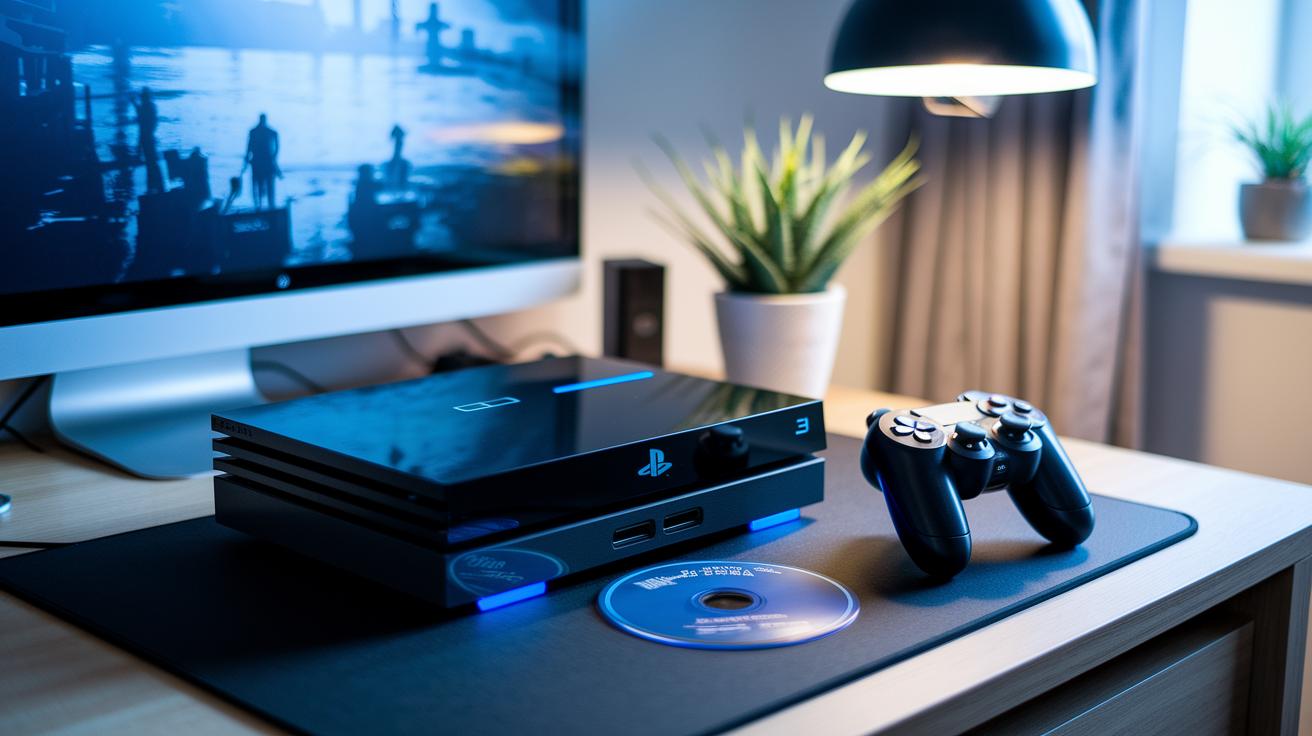
The PS3 first dropped on November 17, 2006. It rocked high-definition graphics with a Blu-ray drive, online play via PSN (that’s PlayStation Network, where you connect with friends), and the neat trick of letting you play old games. Imagine watching your favorite game burst into brilliant detail, it was a game changer.
Then, on September 1, 2009, the PS3 Slim hit the shelves. It was a leaner model, cutting its weight by 33% and using less power. It’s like leveling up to a cooler, quieter gaming rig that fits right in with your setup.
Later, on September 25, 2012, the PS3 Super Slim made its debut. With a top-load Blu-ray drive and smarter cooling, this version felt like swapping out a clunky engine for a sleek, modern one that stayed whisper quiet.
| Model | Release Date | Key Enhancements |
|---|---|---|
| PS3 | November 17, 2006 | Blu-ray drive, PSN online, backward compatibility |
| PS3 Slim | September 1, 2009 | 33% lighter design, reduced power consumption |
| PS3 Super Slim | September 25, 2012 | Top-load Blu-ray drive, quieter cooling solutions |
The Rise of PS 4: Slim, Pro, and VR Integration
The PS4 changed the game by boosting its hardware and introducing the DualShock 4 controller. One writer said it felt like the controller was just a natural part of his hands, perfectly syncing with every move.
Next, the Slim model rolled out with a quieter, more compact design while keeping the same strong performance. Then came the Pro version, which doubled the GPU power (this is the part that handles graphics) to deliver bright 4K HDR visuals and opened the door to immersive VR experiences, inviting gamers to jump into fresh, virtual worlds.
Around the same time, PlayStation Now arrived, offering a flexible way to stream games and giving everyone new options to enjoy their favorite titles.
PlayStation 5 Generations: Standard, Slim, Pro, and What's Next

The PS5 burst onto the scene on November 12, 2020. Built with an AMD Zen 2 CPU featuring 8 cores at 3.5GHz and equipped with ray tracing, it can run games at 120 FPS in 4K. This meant games looked super real and felt immersive. Gamers quickly fell for the dual-sense controller, which brings adaptive triggers and haptic feedback to make every move feel spot on. Even with early supply problems from a global chip shortage, the console managed to sell 40 million units by October 2023.
If you dig a cleaner, more compact look, the PS5 Slim launched on November 10, 2023, is a real head-turner. With its modular disc drive option and slender profile, it fits neatly into any gaming setup. Imagine keeping your shelf clutter-free while still getting all the performance you need. It offers that slick vibe without cutting any corners on power.
The excitement cranks up with the PS5 Pro, which hit the shelves on November 7, 2024. This model is designed for those who crave extra speed and sharper visuals. Thanks to machine-learning upscaling (a smart boost for graphics) and a beefy 2 TB SSD, the PS5 Pro handles tough, graphically intense games with ease. Priced at $699.99, it’s perfect for gamers looking for that extra punch to their gaming setup.
Looking forward, there’s a buzz throughout the gaming community about the next big leap in PlayStation tech. Rumors suggest that the PS6 might roll out sometime between 2026 and 2030, promising even more advanced features and a fresh wave of excitement that could change the way we play forever.
Handheld Innovations: PSP and PlayStation Vita
A gamer once said, "Using my PSP during a long commute felt as thrilling as a boss battle in my favorite game!" The PSP made its debut on March 24, 2005, blending games with movies and music in a cool way. Its slick UMD design felt like having a mini arcade right in your pocket, turning even a crowded train ride into an epic adventure.
Then came the PS Vita on February 22, 2012. With its bright OLED screen and dual analog sticks (two joysticks for smooth control), it pushed the limits of portable design. The Remote Play feature even let you stream PS4 games on the go, shaking up what a handheld console can do. One fan said holding the PS Vita was like grasping a slice of future tech.
| Device | Launch Date | Key Features |
|---|---|---|
| PSP | March 24, 2005 | UMD design, multimedia all-in-one |
| PS Vita | February 22, 2012 | Bright OLED screen, dual analog sticks, Remote Play |
Choosing Your PlayStation Console: Formats, Pricing, and Buying Tips

Picking a PlayStation is like choosing your next epic quest. On one hand, you have the Digital Edition, sleek, simple, and a bit easier on the wallet. On the other, the Disc Edition lets you score physical games and even trade them later, giving you more ways to build and manage your game collection. This decision touches on everything from how you store your games to potential trade-ins down the road.
Money talks, right? Prices have shifted over time for the Original, Slim, and Pro models, so it pays to shop smart. Keep an eye out for bundle deals during seasonal sales. Bundles often throw in extra controllers or game subscriptions that can really boost your gaming setup. And hey, check out trade-in programs or the pre-owned market if you're looking to get more bang for your buck. Sometimes, paying a little more upfront means awesome long-term perks, like the freedom to swap games later.
Before you dive into your next gaming marathon, don't forget the basics: connecting your console, setting up your PSN account, and installing all the system updates. It’s a good idea to jot down a quick checklist for all the wiring, account setups, and updates. Fun fact: nailing your initial setup can lead to smoother gameplay every night.
Final Words
In the action of tracking PlayStation's evolution, we journeyed from the original console design to the impressive tech of the PS 5 models, including PS One, PS 2, and handheld systems. We explored how each generation pushed the limits with cool new features and smarter setups. The timeline shows a clear leap in performance and style, making the ride through playstation consoles a wild replay of epic upgrades. Enjoy every upgrade and keep leveling up your gameplay!
FAQ
Q: What is the timeline of PlayStation consoles and their key features?
A: The timeline of PlayStation consoles starts with the original PlayStation in 1995, followed by PS2, PS3, PS4, and PS5. Each generation brought hardware tweaks, design changes, and new gaming experiences.
Q: What features does the PlayStation 5 offer?
A: The PlayStation 5 features ray tracing, up to 120 FPS in 4K, and the DualSense controller with haptic feedback. The Slim and Pro models further refine design and performance.
Q: What standout aspects define the PlayStation 4?
A: The PlayStation 4 is known for its fast processing, DualShock 4 controller, and multiple versions—Slim for a compact design and Pro for enhanced 4K HDR performance with VR capabilities.
Q: How many PlayStation consoles are there?
A: There are five main home PlayStation systems: the original, PS2, PS3, PS4, and PS5. Each has seen various models, like Slim and Pro, that improve on earlier designs.
Q: How long until a PlayStation 6 is released?
A: Rumors hint at a PlayStation 6 arriving between 2026 and 2030, though there’s no official confirmation from Sony about its development or release timeline.
Q: What made the PlayStation 2 a hit?
A: The PlayStation 2 became a hit with backward compatibility, an affordable price, and an innovative slim revision that drew gamers with improved efficiency and sleek design.