
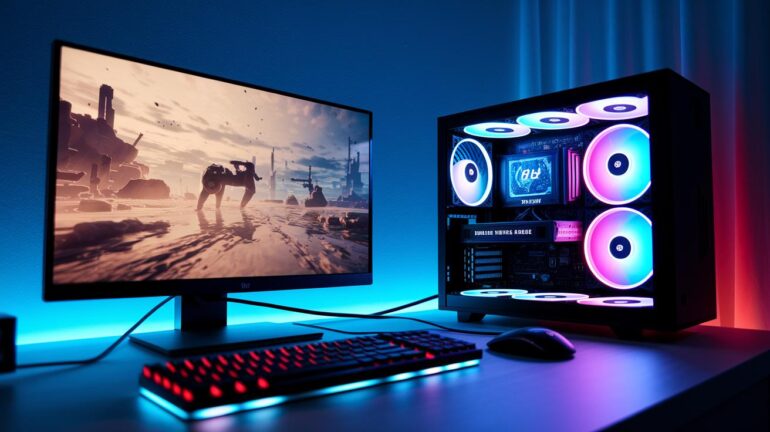
Ever wondered if a plug-and-play console is your best bet or if a DIY PC really rules the game? Consoles let you jump in fast with everything set up from the start, while a DIY PC gives you the chance to tweak every little detail to match your style.
Think of it like this: one option offers a smooth, ready-to-go experience, and the other lets you grab full control of your gear. So, whether you want something simple or you love customizing every part, read on to find out which one gives you the best value.
Head-to-Head Tech and User Experience: Gaming Consoles vs PC
Consoles are all about easy, jump-right-in gaming. They come as complete, plug-and-play systems that run most games in 4K 60 FPS without any hassle. You don’t need to worry about putting together a rig or buying extra gear like a monitor, keyboard, or mouse. It’s like walking into a game room that's already set up and ready, you just hit power and dive in.
PC gaming, on the other hand, gives you a ton of freedom. You can mix and match parts to suit your style and budget. For example, if you want sharper native 4K visuals, you can choose a top-notch GPU; or you might add another monitor for extra screen time during epic battles. But remember, that freedom comes with a higher cost since you have to buy the system and all the extra gear. It’s like crafting your dream gaming studio, where every detail counts.
When it comes to graphics, there’s a clear split. Consoles stick to a solid, no-surprise performance, while PCs often use smart software (like DLSS or FSR, which boost image quality using AI) to hit that native 4K look you see in games such as Cyberpunk 2077 or Starfield. This means you get a different vibe from each system, either a ready-to-go experience or one filled with high-tech, customizable tweaks.
| Aspect | Console | PC |
|---|---|---|
| Performance | Consistent 4K at 60 FPS | Native 4K often needs AI upscaling |
| Setup Cost | One fixed price | Cost for main system plus extras |
| Customization | Standard hardware | You can swap out any part |
| Ease of Use | Works right out of the box | Needs a bit of configuration |
Gaming Consoles vs PC: Bold Performance and Value
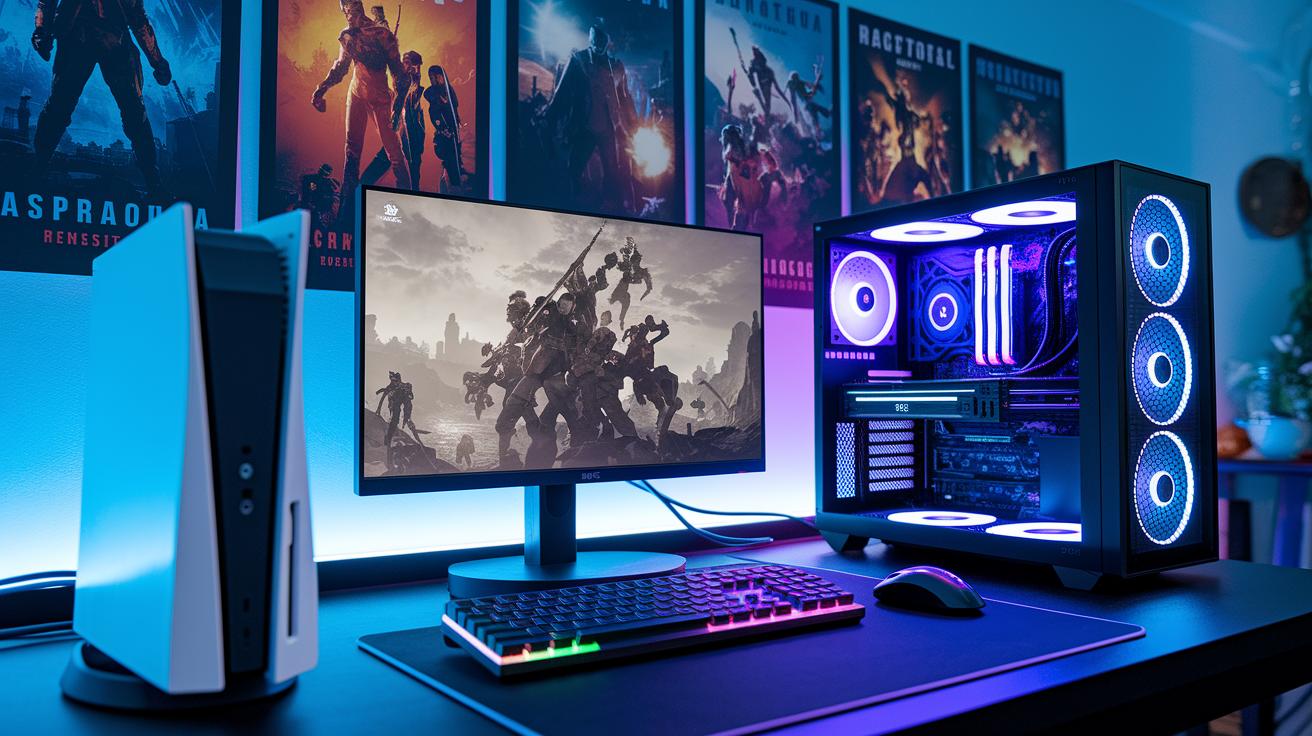
Consoles let you pay one price and jump right into the action, with the system, controller, and a few must-have accessories all bundled together. It’s like grabbing a complete game kit off the shelf, ready to go from the start.
On the other hand, building a high-end PC means piecing together individual parts, like a GPU (that’s the component that drives your graphics), CPU (the main brain), RAM, SSD, plus your own monitor, keyboard, and mouse. It’s a bit like choosing between ordering a ready-made pizza and crafting one yourself, where you get to pick every ingredient, even though it can cost a bit more.
Game prices for both PCs and consoles have started to even out, especially when you catch those seasonal sales that feel like major online store events. Still, what really sets them apart is the ongoing cost. With a console, you usually pay once and dodge future spending, while a PC might need regular updates to keep up with the latest games.
- Initial hardware cost
- Extra accessory fees
- Unique game pricing
- Subscription memberships (like Xbox Game Pass or PlayStation Plus)
- Regular upgrade expenses
In the long run, consoles often offer a steady, lower-cost way to game, while a PC can turn into a recurring investment as you keep swapping and upgrading parts to stay on top of your game.
Performance and Graphics Quality: Console vs PC Gaming
Console gaming gear is built to deliver sharp, reliable visuals. The system uses a special chip that locks in 4K at 60 FPS, giving you a plug-and-play setup that stays steady, even during the trickiest scenes. On the flip side, PC builds rely on a mix of parts that sometimes have a hard time reaching native 4K unless you add a little extra boost.
Benchmarks from games like The Last of Us Part I and Star Wars Jedi: Survivor show that consoles keep frame rates smooth when things get intense. Even high-end PCs can dip below 30 FPS in demanding moments if they don't use upscaling. More power on a PC doesn’t always guarantee a smooth ride.
Both consoles and PCs use nifty upscaling techniques. Consoles manage it automatically with their built-in chips, while PCs turn to tools like DLSS (NVIDIA’s AI frame booster that helps smooth out visuals) or FSR (AMD’s version of this tech) to keep the graphics crisp.
Game Libraries and Exclusive Titles in Console vs PC
PC gamers are in for a treat. They get to explore endless game choices on stores like Steam and Epic. These sites mix big blockbuster games with wild indie finds. Whether you're after a story-packed adventure or a lightning-fast shooter, there’s always something fresh waiting. It feels like walking into an ever-changing arcade that never fails to surprise you.
Console gamers, on the other hand, enjoy a more curated ride. Big names such as PlayStation, Xbox, and Nintendo pour their hearts into unique games that you might not see on PC until much later, if at all. These exclusive titles add a special flavor to each console, giving them a distinct vibe and a devoted following.
Today, the gap between PC and console is shrinking. Console stores are jumping on the same sale trends as PC sites with holiday and mid-season discounts. Plus, cross-play has become the norm, letting friends team up across different systems in games like Fortnite, Call of Duty (a popular action shooter), and Rocket League. This evolution is reshaping how gamers come together and enjoy their digital adventures.
Upgradeability and System Longevity: PC Customization vs Console Hardware Limits
PC gaming setups let you swap out parts like your graphics card, processor, memory, and storage as new games demand more power. This means you can upgrade individual parts instead of buying a whole new computer. Imagine swapping your graphics card to keep that smooth, responsive gameplay when a new game drops. It really gives PC gamers an edge by letting them keep their tech fresh.
Consoles, on the other hand, stick with the hardware they launch with. They only get small updates to firmware and software over time. Their parts are chosen to work well for the life of the system, so you don’t need to worry about upgrading. This makes things simple, but it also means that consoles can’t get a performance boost once they’re out of the box.
When you think about costs, PC upgrades mean you might spend money on each new part while keeping your system up-to-date. Consoles, however, work right out of the box until it’s time to get the next model. So, whether you pick a PC or a console depends on whether you want the flexibility to upgrade bit by bit or the simplicity of a one-time setup.
Control Options: Controllers vs Keyboard & Mouse in Console vs PC Gaming

Controllers are all about comfort and easy play. They’re wireless and ready to go right out of the box. Picture yourself lounging on the couch, gripping your controller as you race through tracks. The design keeps your hands comfy so you can play longer without any hassle.
On the PC side, nothing beats a keyboard and mouse for those split-second moves. They offer super precise control and lets you set up your own key shortcuts. This means each critical shot or command is smooth and on point, thanks to faster USB polling (a way to check inputs very quickly).
Plus, PC gamers have a huge selection of third-party gear. Whether you want to tweak for better performance or just match your style, there’s something out there just for you.
Online Services, Cross-Platform Play & Social Features in Consoles vs PC
PC gamers get a cool online world with platforms like Steam and Epic. These services hook you up with quick matchmaking (that means finding teammates fast), safe cloud saves, and updates that run on their own. It lets you jump right into the action without fretting about manual patches or lost data. It’s a fast, tech-savvy hangout for anyone who loves a community vibe.
Console players enjoy an equally smooth ride on networks like PlayStation Network and Xbox Live. With tiered subscriptions, you score multiplayer access, free games each month, and built-in social hubs to chat and set up matches. Everything is designed to keep your game sessions consistent and friendly, just the way you like it, simple but still buzzing with competitive thrill.
Cross-play even brings gamers from different systems together. Sometimes PC users face hiccups with mixed control methods when teaming up with console players, while console lobbies stay pretty uniform to keep things balanced. Both sides are continuously leveling up their matchmaking and social features, making multiplayer sessions better for everyone.
Final Words
in the action, we broke down tech specs, pricing, performance, and control options. We checked out the role of customization versus plug-and-play ease and the mix of exclusive games and social features.
We also looked at online services, cross-platform play, and upgrade potential to help you level up your gaming skills. Remember, whether you're on a high-end PC or a sleek console, gaming consoles vs pc are all about enhancing your play. Keep enjoying every match!
FAQ
How do PC vs console gaming statistics compare?
The PC vs console gaming statistics indicate that PCs offer more performance customization and upgrade paths, while consoles deliver a uniform, plug-and-play gaming experience with consistent performance.
What makes PC gaming better than console gaming?
The reasons why PC gaming is seen as better include higher customization, upgradeability, and superior graphics quality through AI upscaling, all while letting you tailor your gaming setup to your needs.
What are the pros and cons of PC gaming versus console gaming?
The PC vs console pros and cons show that PC gaming offers flexible hardware and customizability, whereas consoles provide simplicity, steady performance, and a lower overall setup cost.
How do PC graphics compare to console graphics?
The PC vs console graphics comparison reveals that PCs often use AI-driven upscaling to reach near-native 4K, while consoles typically guarantee smooth 4K at 60 FPS with less tweaking required.
Should I get a gaming PC or a console like the PS5?
The decision between a gaming PC or a PS5 depends on your preference for customizable hardware and upgrade options on PCs versus the ready-out-of-box ease and exclusive titles found on consoles.
Is PC gaming overtaking consoles?
The question of whether PC gaming is overtaking consoles reflects that while PCs focus on cutting-edge performance and flexibility, consoles still maintain a strong appeal with their simplicity and cost-effectiveness.
Why might some consider PC gaming worse than console gaming?
The idea that PC gaming is worse than console gaming comes from factors like higher upfront costs, the need for regular hardware upgrades, and sometimes a more complex setup process compared to consoles.
Why do some gamers prefer consoles over PCs?
The reason gamers prefer consoles is that consoles deliver a straightforward, ready-to-play experience with uniform performance, reducing the hassle of constant upgrades and added peripheral expenses.