
If you have ever woken up to a phone at 12 percent after leaving it on a wireless pad all night, you already understand the problem Qi2 set out to solve. The phone was never in the right spot. A few millimetres off the coil, and a charger either slows to a trickle or stops.
For most of the 2010s, that was the deal with wireless charging. It was convenient in theory and unreliable in practice, and anyone who cared about speed kept a cable in the drawer.
What changed in 2023
In January 2023 the Wireless Power Consortium, the industry group behind the Qi standard, announced Qi2. The headline feature was a Magnetic Power Profile, which uses a ring of magnets to snap a phone into the exact position over the charging coil. Apple contributed the basis of that profile from its own MagSafe design, as TechCrunch reported at the time, which meant the magnetic approach iPhone owners already used could become an open standard for every manufacturer.
The consortium’s own explanation is simple: when device and charger align perfectly, less energy is lost as heat, and more efficient charging is also faster charging. The consortium expected the first certified Qi2 products in time for the 2023 holiday season.
Why alignment matters more than wattage
Most people compare chargers on a single number: watts. For wireless charging, that number means little if the coils are misaligned. A pad rated for 15 watts delivers far less when your phone sits off-centre, and the wasted energy becomes heat, which phones answer by throttling charging speed.
Magnets remove the guesswork. You put the phone down, it clicks into place, and the charger can deliver what it promises. That consistency is what made wireless charging something you can rely on rather than something you check.
What a Qi2 charger looks like now
The standard has also changed how charger makers design. Once alignment is guaranteed by magnets, a stand can hold a phone at an angle, or even vertically, without the phone sliding out of position.
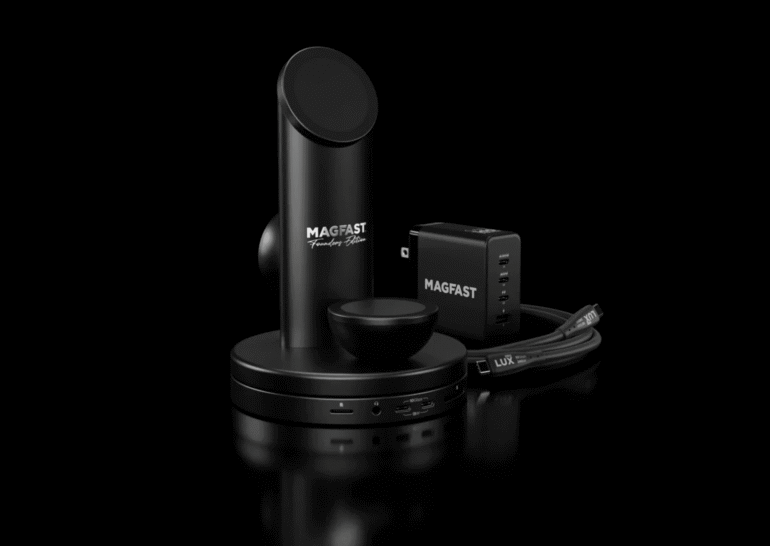
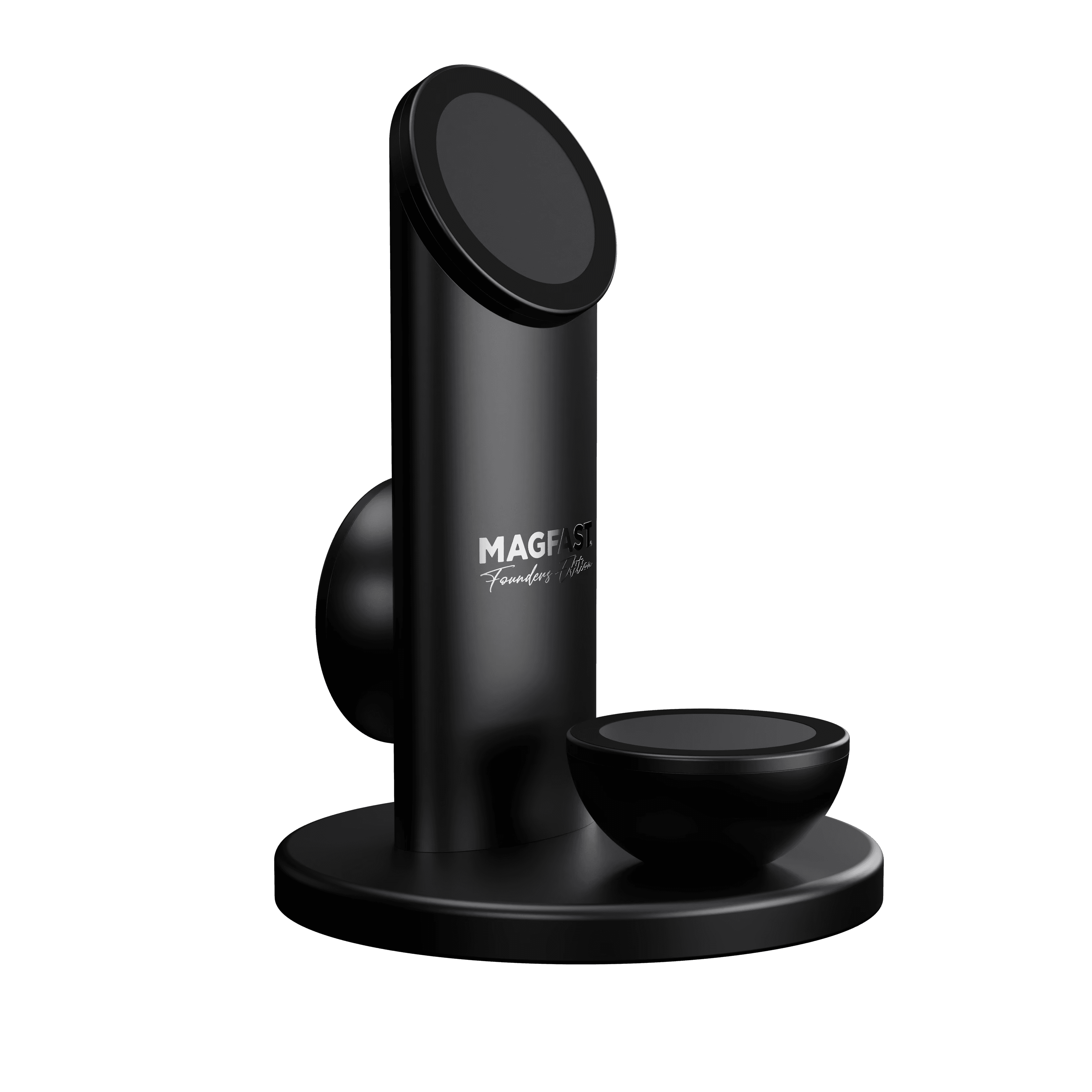
MAGFAST, a charging company based in Cornwall-on-Hudson, New York, built its Air Pro stand around that idea. According to the company, the Air Pro has three Qi2 charging zones at 15 watts each: an angled front pad for a phone, a flat top surface for a second device, and a vertical rear pad sized for AirPods Pro 2. It also carries a USB-C port rated at 140 watts, enough to charge many laptops from the same stand. MAGFAST says the stand weighs about 2.2 pounds and uses aluminium and steel, so it stays planted when you lift a phone off it.
That weight is a practical detail. Magnetic chargers grip hard, and a light stand tends to come up with the phone.
What to check before you buy
Qi2 is a certification, and not every magnetic charger carries it. Some older products use magnets without meeting the standard. A few checks will save you from a slow pad:
- Look for Qi2 certification, not only the words “magnetic” or “MagSafe compatible”. The Wireless Power Consortium keeps a searchable database of certified products.
- Check the power per zone on multi-device chargers. A stand that splits a single low wattage across three devices will disappoint.
- Match the charger to your phone. Recent iPhones and a growing number of Android phones support Qi2. Older phones may need a magnetic case to align properly.
The bigger picture
Qi2 did something standards rarely manage. It took a feature one company had proven in the market and made it available to every phone and every charger maker. The result is a category that finally behaves the way wireless charging was always sold: put the phone down, walk away, come back to a full battery.
For people who have put up with drawers of mismatched cables and pads, that shift is the most useful change in charging in years.