
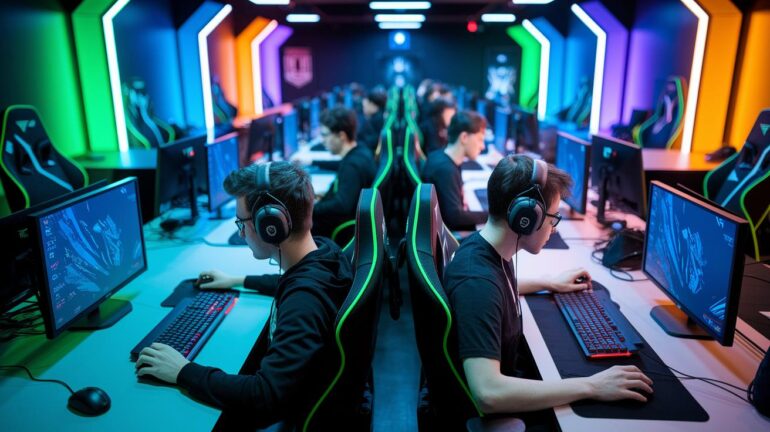
Ever notice how South Korea's mobile games are creating a buzz? They racked up 350 million downloads and pulled in $3.7 billion over just three quarters. It’s like watching your favorite game get a power-up right before your eyes. In Q3, downloads shot up by 17% and in-app buys climbed even more. It hits like that thrill when you nail a tough boss fight.
In this post, we’re diving into the trends powering Korea’s digital playground and showing how they’re changing the way gamers play and win.
South Korea Gaming Industry Market Overview
South Korea's mobile gaming scene is on fire right now. Over the first three quarters of 2024, gamers downloaded apps 350 million times and spent about $3.7 billion. That shows just how much digital fun is taking over the nation.
Q3 cranked up the excitement even more. Downloads jumped by 17% quarter-over-quarter to nearly 130 million, and in-app purchase revenue climbed by 3% to roughly $1.24 billion. To put it simply, think of it like upgrading your in-game gear, a small boost can totally shift the tide of the match. Google Play really leads the pack here, raking in 75% of all mobile game revenue.
| Metric | Value |
|---|---|
| Downloads (First 3 Qs) | 350 Million |
| Revenue (First 3 Qs) | $3.7 Billion |
| Q3 Downloads | ~130 Million |
| Q3 In-App Revenue | $1.24 Billion (+3%) |
| Google Play Share | 75% |
Key takeaways:
- 350 million downloads and $3.7 billion in revenue over three quarters.
- Q3 downloads surged by 17%.
- In-app revenue increased by 3%.
- Google Play dominated with 75% of the earnings.
These numbers show just how dynamic the Korean digital gaming market is. Whether you’re a casual player or a hardcore fan, there’s no denying that South Korea is a prime hotspot for mobile gaming action.
South Korea Gaming Industry Excels with Bold Trends

Korea's mobile gaming scene is on fire. Role-playing games like Lineage M raked in $2.1 billion from January to October 2024. That’s over half of the total mobile game revenue, showing how much players love deep storylines and epic quests. Imagine the rush of gearing up for a boss fight and nailing that final hit – that’s what Lineage M brings to the table.
Strategy games aren’t left behind either. They jumped by 69% in revenue during the same period. It’s like discovering a secret power-up when you need it most, a smart, satisfying boost that turns every match into a brain-bending challenge.
Key points:
- Role-playing games take up more than half of the mobile game revenue.
- Strategy titles surged by 69%, offering fun, tactical gameplay.
- Both genres highlight Korea’s love for immersive and rewarding gaming experiences.
Ever had your favorite strategy game suddenly level up? It feels like grabbing the ultimate weapon in the heat of battle, exciting and transformative. These trends show that Korea’s gaming market isn’t just about downloads; it’s about creative, smart play that keeps gamers coming back for more.
Innovative Game Companies in South Korea Gaming Industry
Netmarble Games and Supercent are shaking things up big time by landing six of their titles in the top ten for overseas mobile game revenue. It’s like unlocking a hidden bonus level in your favorite game, a totally unexpected and game-changing win. This shows they’re playing on a whole different level around the world.
Big hit games like Jackpot World™, Lotsa Slots, Cash Frenzy™, Marvel Contest of Champions, and Solo Leveling: Arise all broke past the $100 million mark in overseas earnings. Think of it as pulling off a perfect combo move when it really counts. Their success proves that clever design and awesome gameplay can score huge wins internationally.
Fresh ideas continue to push the limits. In May 2024, 111% dropped Lucky Defense, a tower defense game that mixes cooperative play, random summoning (bringing in characters unpredictably), merge mechanics (combining elements to create power-ups), and hero recruitment. In just a few weeks, it rocketed to second place globally in tower defense mobile revenue. Picture pulling off a jaw-dropping, last-second play that flips the whole game, Lucky Defense did exactly that, completely changing how tower defense games are played.
| Achievement | Description |
|---|---|
| Global Dominance | Netmarble Games and Supercent landed six titles in the top ten overseas. |
| Massive Revenue | Five standout games each crossed the $100 million mark in revenue. |
| New Heights | 111%’s Lucky Defense climbed to second globally for tower defense mobile revenue. |
South Korea Gaming Industry Localization and Payment Innovation

Kakao Pay kicked off in 2014 with KakaoTalk and quickly became a major player in South Korea's payment scene. Over half of this country's 50 million people now use it, processing more than 3 trillion transactions each month. It’s like upgrading from a regular car to a turbo engine, fast, smooth, and built for the digital age.
This local twist has totally changed how money flows in the Korean digital entertainment world. Developers who tune their games to fit local vibes now have a clear recipe for success. Picture a game that mixes its special in-game events with traditional Korean festivals and the smooth payment flow of Kakao Pay, it’s like landing that perfect headshot when you need it most.
Kakao Pay isn’t stopping there. It’s teaming up with names like Xsolla to push its influence beyond just South Korea. This move not only cranks up in-app purchases but also sets a new bar for digital game distribution. In truth, by following these smart localization tricks, developers can nail the Korean market while still reaching players around the world.
Adopting these changes is like powering up your game with the best cheat code, boosting both your cash flow and the fun factor for players.
Emerging Trends and Future Forecasts in South Korea Gaming Industry
Get ready for some wild changes in how gamers connect and play. With 5G rolling out, lag is almost a thing of the past. Imagine pulling off that perfect combo where every move counts in real time, and you feel the rush without any annoying delays.
Cloud gaming is leveling up too. More players are swapping out heavy consoles for flexible, on-the-go play. Cloud platforms handle all the tough graphics and computation (all the heavy lifting), so you can start a game on one device and pick it up on another without missing a beat.
Plus, cool tech like AR/VR and smart machine learning is shaking things up. Think of AR turning your everyday streets into game battlegrounds or race tracks, adding an epic twist to your play. Meanwhile, machine learning will tweak the game’s difficulty based on your skills, like having a game that learns your moves and keeps things challenging.
All these trends point to an exciting future in the next couple of years. Faster networks, cloud-powered play, immersive AR/VR, and smarter game design are set to keep South Korea at the forefront of digital fun, making every game session feel like unlocking an exhilarating new level.
Final Words
In the action, we broke down key aspects of the south korea gaming industry. We saw how mobile downloads, revenue boosts, and innovative strategies are driving the sector forward.
The data and examples gave a clear picture of mobile gaming success and localized payment innovations. It all points to a bright future in the gaming space. Keep boosting your gameplay and stay sharp for what comes next.
FAQ
Frequently Asked Questions
Q: How big is the gaming industry in South Korea?
A: The South Korean gaming industry is enormous, driven primarily by mobile games that logged 350 million downloads and over $3.7 billion in revenue during early 2024’s first three quarters.
Q: Why is gaming so popular in South Korea?
A: The gaming scene in South Korea thrives thanks to fast internet speeds, a strong mobile market, and easy-to-use payment systems that make in-game purchases a breeze for millions of players.
Q: Is South Korea a gaming country?
A: South Korea is a true gaming country with a vibrant community, top game companies, and a wide range of popular titles that have influenced global esports and digital entertainment scenes.
Q: What are South Korea’s notable gaming companies?
A: Notable companies like Netmarble and Supercent are industry leaders—they produce hit mobile games and innovative titles that score big overseas, boosting South Korea’s global gaming influence.
Q: What are some popular Korean video games?
A: Popular Korean games include League of Legends, Valorant, Lost Ark, and Dota 2, showcasing the country’s knack for creating engaging titles that resonate with diverse gaming communities worldwide.
Q: How have mobile games shaped South Korea’s gaming landscape?
A: Mobile games have reshaped the landscape by generating billions in revenue, driving massive download numbers, and fueling rapid growth in genres like RPGs and strategy, making them a cornerstone of the industry.
Q: What are emerging trends in South Korea’s gaming industry?
A: Emerging trends feature wider 5G rollout, cloud gaming expansion, AR/VR experiences, and machine learning integrations, paving the way for fresh, innovative gameplay that keeps the market dynamic.
Q: How are payment systems like Kakao Pay influencing game monetization in South Korea?
A: Payment systems such as Kakao Pay, used by over half the population, streamline in-game transactions and boost revenue growth, setting a solid example for international developers targeting Korean gamers.
Q: What are the top three industries in South Korea?
A: The top three industries include high-tech electronics, automotive manufacturing, and digital entertainment, with the booming gaming sector playing a major role in the nation’s economic success.