

Ever wonder if game ratings really tell the whole story? Imagine a secret hack that gives you all the deets about a game before you even hit download. No more guessing, just clear signals about things like violence, language, or other stuff.
In 2023, almost half of the games landed an E rating, making it super easy for you or your family to pick the right one.
Stick around, and let's break down these labels together to see what they really mean.
2. game content rating breakdown: Crisp Insights

Game ratings are like quick cheat sheets that help players and parents figure out what to expect from a game. They cut through the clutter and let you know if a game is friendly for all ages or better for older players. In 2023, almost half (47%) of games got an "E" rating, while 23% were rated "T." This system makes it easy to find the right game for you or your family.
Each label sorted by maturity gives you more than just an age range. They break down game content into over 30 types, covering things like violence, language, and nudity. For example, a term like "Mild" tells you the issue is not too strong or frequent. Whether you download a game or pick up a physical copy, these ratings stay the same. Plus, if a game has online chat or lets you spend real money in-game, you get an extra heads-up.
| Rating Board | Category Example | Age Range | Key Criteria |
|---|---|---|---|
| ESRB | E, T, M | 3 – 18+ | Maturity levels and content descriptors |
| PEGI | 3, 7, 12, 16, 18 | 3 – 18 | Age bands and content icons |
| CERO | A, B, C, D, Z | All ages to restricted | Cultural context and descriptor scales |
Detailed labels and pop-up warnings for online play give you the full picture. They point out things like a bump in violence or light language and even let you know if there are features such as chatting with unknown players or in-game buying options. It’s a simple, friendly system designed to help you pick games that suit your style.
Core Rating Methodologies in Game Content Rating Breakdown

When game makers send in their work, they pack everything up, gameplay footage, scripts, and all the extra materials. This full package is the first move to make sure every part of the game is looked at closely. It gives the rating board a clear picture of what’s coming, so there are no surprises.
After that, a group of expert reviewers jumps in. These seasoned pros know all about what’s appropriate for different ages. They check the game against a set of clear rules, looking for any bits that might not be okay for younger players. They also mark anything that needs a more detailed explanation.
Here’s a quick breakdown of the process:
- Submission of game content and materials.
- Quick screening to catch any forbidden parts.
- A deep dive by reviewers into the content.
- Deciding which age group the game fits.
- Final approval and updating the game’s label.
Whether a game is digital or comes in a box, every version gets a thorough check. Digital games go through a secure online system that speeds things up and lets them be updated when changes happen. Physical games, on the other hand, get an extra look to make sure the printed details match the online version. This way, the rating boards keep things fair and steady, no matter the format.
Breakdown of Content Descriptors in Game Content Rating Breakdown

Content descriptors are like cheat codes for figuring out what’s inside a game. They quickly show players and parents details like violence, strong language, and nudity. A "Mild" tag means things are kept to a low level and aren’t too intense.
Violence ratings, such as "Violence – Moderate," let you know there might be a few fight scenes or brawls without heavy gore. It’s similar to a quick skirmish in battle mode where focus stays on fun gameplay rather than brutal realism.
Language descriptors work the same way. For instance, "Language – Mild" tells you that only a few casual curse words or slang pop up. It’s like hearing a light swear during an exciting match – just enough to add flavor without taking over the conversation.
When it comes to nudity and sexual content, the labels break down how much skin is shown. "Mild" means any nudity is brief and not meant to be a major focus, while a stronger label warns that some scenes need a more mature audience.
Interactive descriptors cover things like online chat, user-created content, and in-game purchases. They’re a heads-up to keep an eye out for any surprises when you’re playing live with others.
Comparison of Major Rating Boards in Game Content Rating Breakdown
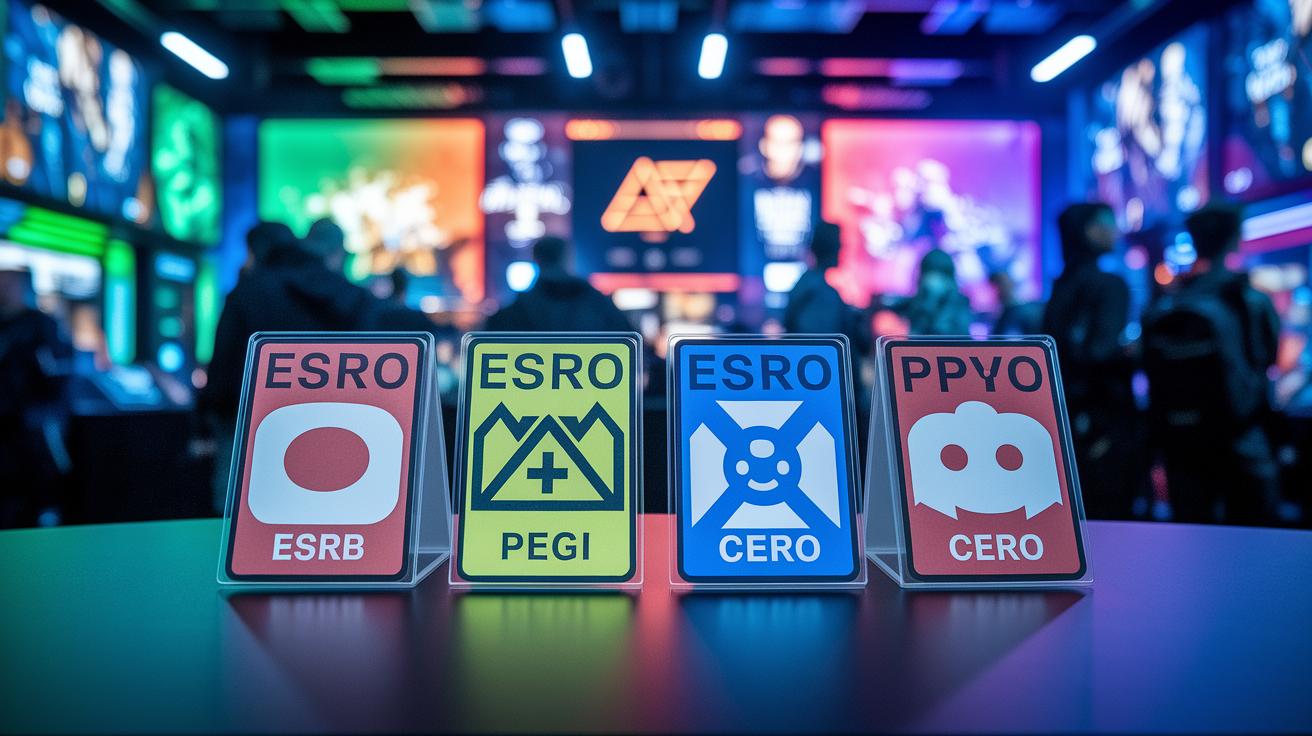
Different regions have their own rating boards that mix local rules with cultural vibes. They all aim to help players know what to expect, but each one adds a unique twist.
ESRB and North American Approach
In North America, the ESRB uses a five-step rating system paired with over 30 content tags to help parents understand what’s inside a game. It also points out interactive features (like in-game chat) and other digital play elements. Here’s something cool: even well-known indie games get labels that note not just violence but also teamwork online.
PEGI and European Age Bands
Over in Europe, PEGI sticks to simple numeric age bands along with five clear icons. These symbols give you a quick visual hint about the game’s content. Think of it like this, a little icon of a crossed-out cigarette signals that the game deals with mature themes in a straightforward way.
CERO and Japanese Standards
Down in Japan, CERO rates games on a five-level scale from A to Z while weaving local cultural context right into its guidelines. The rare Z-rating stands out by showing that the game pushes the limits of what’s normal in society. Imagine this, a firm Z-rating tells you the game might be breaking traditional barriers.
Trends are emerging that could blend these systems for global game releases. Developers and regulators are even talking about a hybrid approach that borrows the best parts of each method while tweaking them for modern digital features. Next, picture a future where a single rating scale adjusts in real time, giving you the scoop on interactive digital content.
Practical Guidance for Parents in Game Content Rating Breakdown

Start by figuring out your family's game rules. Decide which games match your values and your kid’s maturity level. For example, if you like games with less violence and fewer online chats, use that as your guide.
Next, get to know what each rating and tag means. You see ratings like E, T, or M? They tell you about the game’s content (like if it has lots of action or strong language). Those extra tags explain details such as violence, language, and nudity. For instance, a "Mild" tag for language means there are just a few casual words. When you match these details with what you find acceptable, you get a clear picture of what your child might experience.
Also, check for warnings about online chats, in-game purchases, and location sharing. These alerts help you decide if the game fits your comfort zone. Finally, use the settings on your gaming platforms or third-party tools to keep an eye on play. Tools like Norton 360 for Gamers can help you manage playtime, limit in-game spending, and boost online safety.
Evolution and Trends in Game Content Rating Breakdown

Mobile apps are trying out new ways to rate game content. AI helps by quickly scanning gameplay (like a super-fast replay), which speeds up labeling. This means ratings update much faster than before. And now, platforms can use real-time info to check even rapidly changing details.
Worldwide, rating boards are teaming up to create one standard across regions. They’re testing real-time content checks and unified ways to verify age (to ensure players are old enough). This change makes life easier for developers and parents alike, giving everyone a clearer idea of what to expect in game content.
New policy updates and instant enforcement tools are on the horizon. These steps aim to boost safety and clarity in rating systems, leading to quicker reactions when content changes and more consistent ratings everywhere.
Key Controversies in Game Content Rating Breakdown

Sometimes, big-name games get unexpected ratings that spark heated talks. Gamers, parents, and critics all wonder if the scores really match up with the actual content. They argue that when ratings feel off, it confuses everyone about what they truly mean and might lead to unfair labels for age-appropriate content.
Another hot topic is how cultural and regional differences play into the rating process. In some places, content tags feel super strict, while in others, they’re handled more casually. This mix-up makes folks question if local values are pushing reviewers to apply rules differently, which only adds to the confusion.
Now, there are moves to clear things up. New initiatives, like open-access descriptor databases and independent ethical review panels, aim to give everyone a better look at how ratings are decided. This push for transparency could finally help gamers know exactly what to expect.
Final Words
In the action, we saw a clear game content rating breakdown that unpacks how ratings, descriptors, and safety measures work.
The post connected rating board insights to real-life game choices.
We checked everything from submission steps to differences in age guidelines, and even parental tips.
This breakdown helps smooth the way for smarter game picks and better safety controls.
Keep your gaming mind sharp and enjoy turning these insights into better gameplay choices.
FAQ
What does the video game content rating breakdown and PS4 ratings explain?
The video game content rating breakdown explains how games—including PS4 titles—are categorized by age suitability, content warnings, and maturity levels to help you choose what fits your gaming style.
What do video game ratings charts, ESRB rating charts, game age ratings, and content rating scales show?
The video game ratings charts, ESRB charts, game age ratings, and content rating scales show age guidelines and content warnings, offering gamers a quick way to see if a title meets their play preferences.
What does AO rated games mean?
The AO rated games term means a game is designated Adults Only, featuring explicit content that is intended solely for adult players and generally restricted for younger audiences.
What is the video game rating system?
The video game rating system is a standardized framework that assigns age classifications and content descriptors, ensuring you know what to expect regarding themes like violence and language before playing.
What are Z-rated games?
The Z-rated games term refers to Japanese CERO ratings indicating that the content is restricted to adult players because it includes mature or explicit material not meant for children.
How are the six different ratings for games categories determined?
The six different ratings for game categories are determined by experts who review gameplay, scripts, and content details—assessing factors like violence, language, and interactive features to assign a suitable rating.
What does the 7 rating on video games indicate?
The 7 rating on video games typically comes from systems like PEGI, where a rating of 7 signals content that is generally mild yet may prompt caution for very young players regarding certain themes.
What is a T-rated game?
The T-rated game label designates a title as Teen by the ESRB, meaning it includes moderate violence, suggestive content, or mild language that might not be appropriate for younger children.
What is Xbox Cloud Gaming about?
The Xbox Cloud Gaming service lets you stream games over the internet, meaning you can play a diverse library without owning high-performance hardware—ideal for gaming on various devices.
What is Fortnite?
The Fortnite game is a free-to-play title known for its fast-paced, creative gameplay that mixes building mechanics with battle challenges, giving both casual and competitive players a unique experience.
What is Fortnite Battle Royale?
The Fortnite Battle Royale mode is a competitive, last-player-standing format where gamers face off in a shrinking play area, combining strategy, shooting, and building for a thrilling match.
What is Call of Duty: Warzone?
The Call of Duty: Warzone is a free-to-play battle royale game that plunges you into large-scale combat, blending realistic weapons with strategic play to create gripping multiplayer experiences.
What is Call of Duty: Mobile?
The Call of Duty: Mobile game brings the renowned franchise to smartphones, featuring classic maps, familiar mechanics, and competitive multiplayer modes designed for gaming on the move.
What is Xbox Game Pass?
The Xbox Game Pass is a subscription service that offers access to a wide library of games, making it easy to explore new titles and diverse genres without buying each game individually.